Thursday, March 28, 2024

Digital Negatives

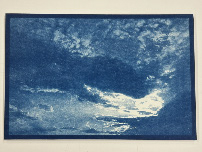
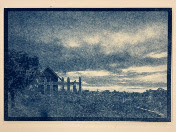
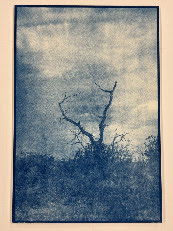
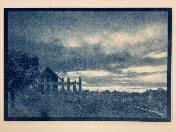
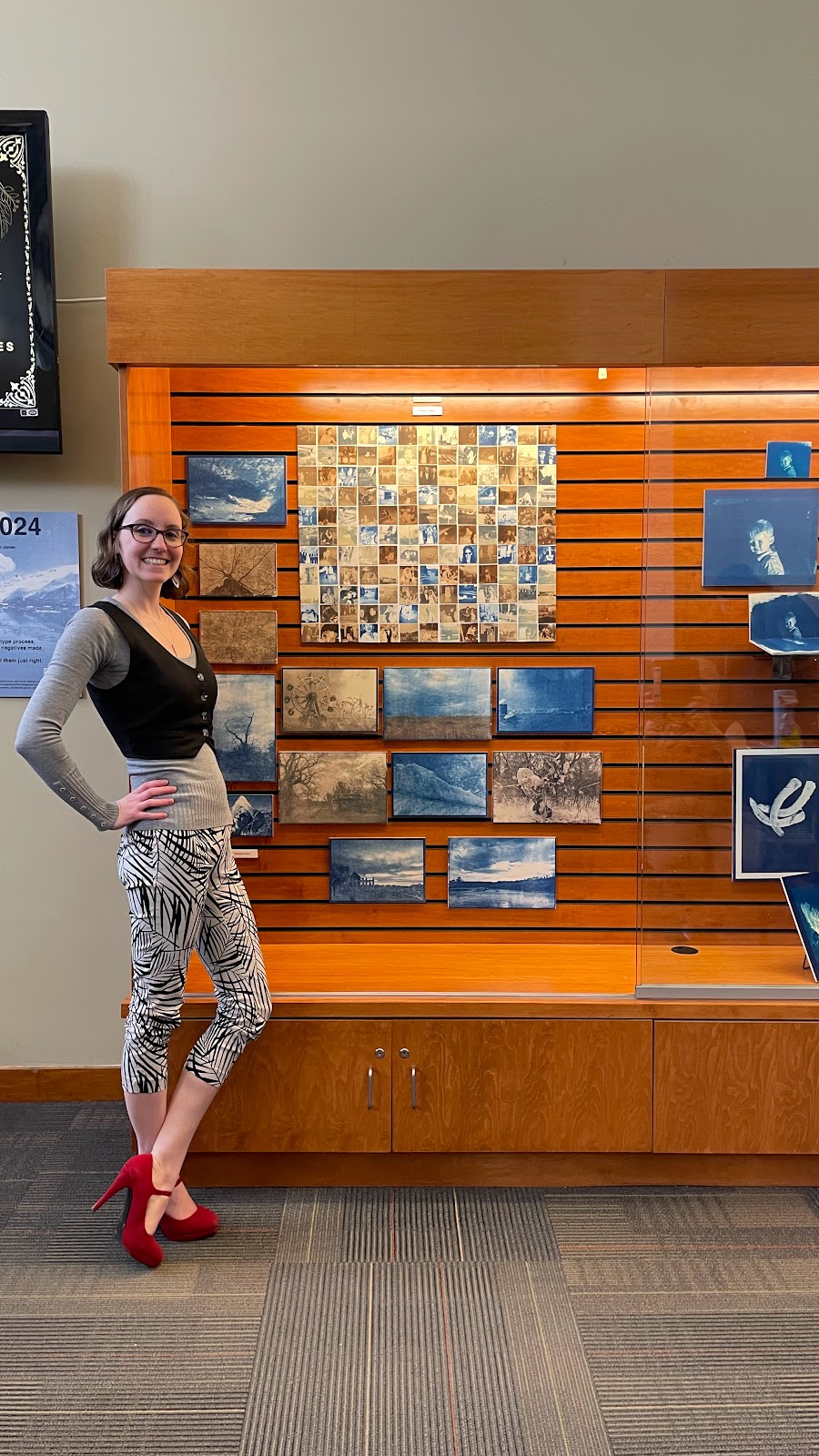
My name is Elizabeth Dow and I am in the Bachelor of Fine Arts in Visual Arts. My focus is in photography and for this installation the prints I created were all from images I had made for previous classes and wanted to experiment with more.

Most of the images I tend to take are landscapes or “artificial landscapes” that I have built as dioramas and then photograph. I thought that many of them would lend themself quite well to the cyanotype process and ended up printing thirteen different negatives to play around with. 


Editing images into negatives to work for cyanotype involved a steep learning curve for me and required quite a few tests of each image to figure out the best negative and exposure time to use. 


Once I got my prints looking the way I wanted in the conventional cyan I wanted to work more with toning to see if I could find the correct mood for some of my specific images. 
 
Wine Tannins and Rooibos Tea/Wine Tannins

Green Tea

Wine Tannins

Green Tea

Selectively Toned with Wine Tannins

Working with negatives gets a very different result than the herbarium contact prints did, but has given me ideas to combine using negatives with contact pieces to see what results I can achieve. 

This whole process has been a great experience and has made me want to explore more. 


Florence Duesterbeck’s Cyanotypes 2

I am from Regina and I am a senior student at the University of Regina enrolled in the Post-Baccalaureate in Visual Arts Certificate program. This is a post Bachelor of Fine Arts program of ten higher level Art and Art History classes. For the senior class I am enrolled in I am doing some work with cyanotype along with other photography related art.

This semester I did a more cyanotype work before changing over to a regular photography printing. 


I was intrigued with the marine specimens lent to the class.


For this new display, I used a photograph of the whole Glass Sponge Skeletons - Venus' Flower Basket’s (Euplectella aspergillum). This was printed on Canson XL Watercolor paper.


Basket Star 4 - I was also intrigued with the basket star and photographed both sides and combined them into one negative to create this image for printing with cyanotype on photo printing paper. The top and bottom were originally photographed on different backgrounds and the bottom one was adjusted to give it an even lighter background. I added borders because I like adding lines and borders in some of my artwork. The top image might be considered over exposed, however I like the felling of being under water that it gives me, so I have used artistic licence using it this way. Printed on photo print paper. 


Basket Star 4 (poster edge) - I then edited a copy of the negative’s file by adding the poster edge filter and got this variation which brings out the texture of the star. It reminds me of illustrations in old biology books.


Multiple Sea Stars (poster edge) is a collection of the different types of sea stars lent to us. These loans were a learning experience for me. I did not know there was such variety of shapes in various species. They lead me to start to explore more information about them. I used the poster edge filter on the image and printed it on Canson XL Watercolor paper.


The digital negative for the Marine Life still life, was not inverted. Usually, the image file for cyanotypes is inverted to create the negative for printing. I like the glow I got from not doing the inversion. It reminds me of underwater films with the lights shinning on the creatures. The glow you can get on some cyanotypes, especially when printed on photo print paper was one of the goals I had for this semester.


The Idle image was used for experimenting and testing finishes and a mounting technique that does not use framing with glass. Last semester I created a series of 17 cyanotype images that I would like to submit to show in a gallery. However, the cost of framing them is prohibitive. Mounting on cradle boards is a method many artists are using to present their pieces. Watercolor artists and others use special waxes and UV spray varnishes to protect the surface so glass is not needed. I researched materials that would be compatible with cyanotypes. Cyanotypes brown or yellow when in contact with alkaline materials. Many archival art materials are in the alkaline PH range to make them acid free. 

One of my mounted tests is in the show.


While working with this image I have decided to start a new cyanotype series of work on vacant houses that are not available to house people who need them. This will complement the eleven image photographic series St John and College which is also about issues related to the housing crisis. 


Archer Installation #2 - digital negatives

For the past several weeks, students have been working on making cyanotype photographs using digital negatives. As with their Herbarium specimens, these images are made using a contact printing process, where the printed negative is sandwiched between the coated/sensitized paper and glass. What is different, however, is that instead of silhouettes in the negative, these are continuous tone (mostly) representational images.
29 years ago, I was in my last semester of my BFA in Interdisciplinary Fine Arts Studies at York University, where I had worked as a darkroom technician for Jamie Ferguson, and taken classes in alternative photographic processes with Professor Jack Dale. Then, if we wanted to make cyanotypes (or van dyke brown, or gum bichromate prints) from enlargements, we used ortho film to create internegs from our 35mm film. This was a complicated chemical process undertaken in the darkroom, and our results were limited by the range of the film and the qualities of our originally shot negatives.

Risa Horowitz, Summer 1995


Now, we use Photoshop and our big Epson printer to adapt any of our images for enlargments. The process requires customizing curves in software to account for the particular characteristice dynamic contrast range of the cyanotype chemisty formulation, the type of paper used for printing, and the specific UV light source used.

Christina Anderson’s Cyanotype book (https://www.christinazanderson.com/books/) offers a really useful starting point for plotting a custom curve and testing with a step-wedge - thank her, and Elizabeth Bourne (https://www.philotera.com/gallery/abstracts-inspired-by-the-arctic/) who shared with me her insights of the customization process back in 2019. From this starting point, each image requires the testing of variations to achieve decent renderings across the tonal range for any given image.

Once again these students have impressed me with their engagement and experimentation, using this process to explore their personalized choices of imagery within each of their unique art practices. Please do read through each of the artist’s blog posts to learn more about their technical, material, and thematic approaches, from trekking in Nepal to family histories, imaginary worlds to real-world social justice.

class portrait *missing Rhylynn!


Professor Risa Horowitz

Jayden Thompson

Elizabeth Dow


Jim Hall
Florence Duesterbeck


Rhylynn's work installed


Johnathan Jones
Rose Molina


Nico Inocalla


Digital Negatives

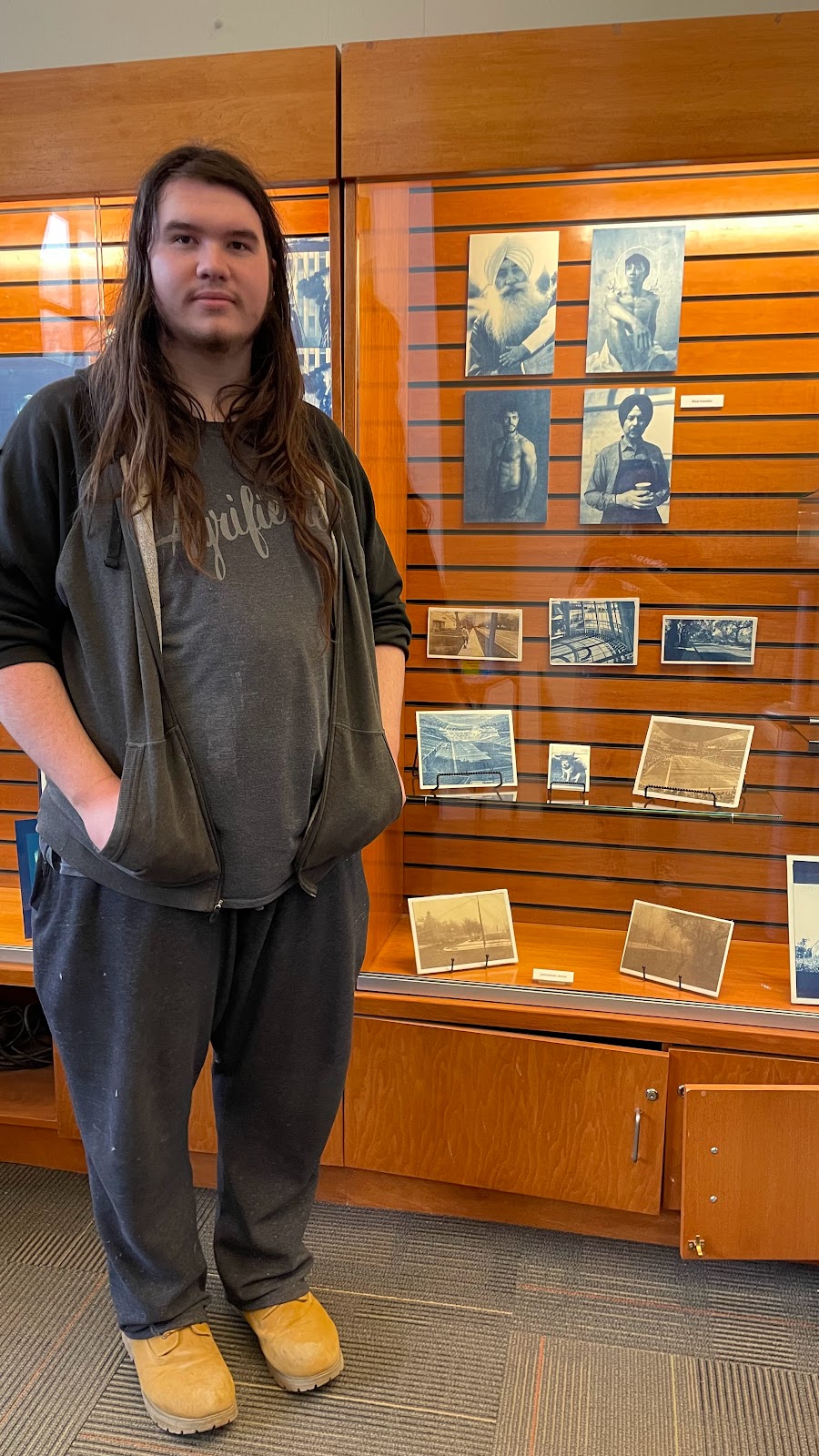
Hello there my name is Johnathan Jones, I'm a photographer who works mainly with digital photos. I live and work in Regina Saskatchewan. I am on my way to be finishing my MAP (Media, Art, and Performance) Certificate program which is coming to an end soon.


the Mosaic Stadium during the night Gray cup. this coated and exposed for fifteen minutes then toned with Wine tannin and ginger and cinnamon tea.

+ 
this is my old dog named Thor, and he was coated and exposed for fifteen minutes

this is the corner of 6th ave and Athol st. it was coated and exposed for fifteen minutes

The Mosaic Stadium day just before Gray cup. it was coated and exposed for fifteen minutes.


this was taken on the second floor FNU building, was coated and exposed for fifteen minutes

looking down 6th ave by Scott Collegiate. this coated and exposed for fifteen minutes then toned with Wine tannin and ginger and cinnamon tea.

This Yvonne Jones walking down 4th ave and this coated and exposed for fifteen minutes then toned with Wine tannin and ginger and cinnamon tea.


Digital Negatives

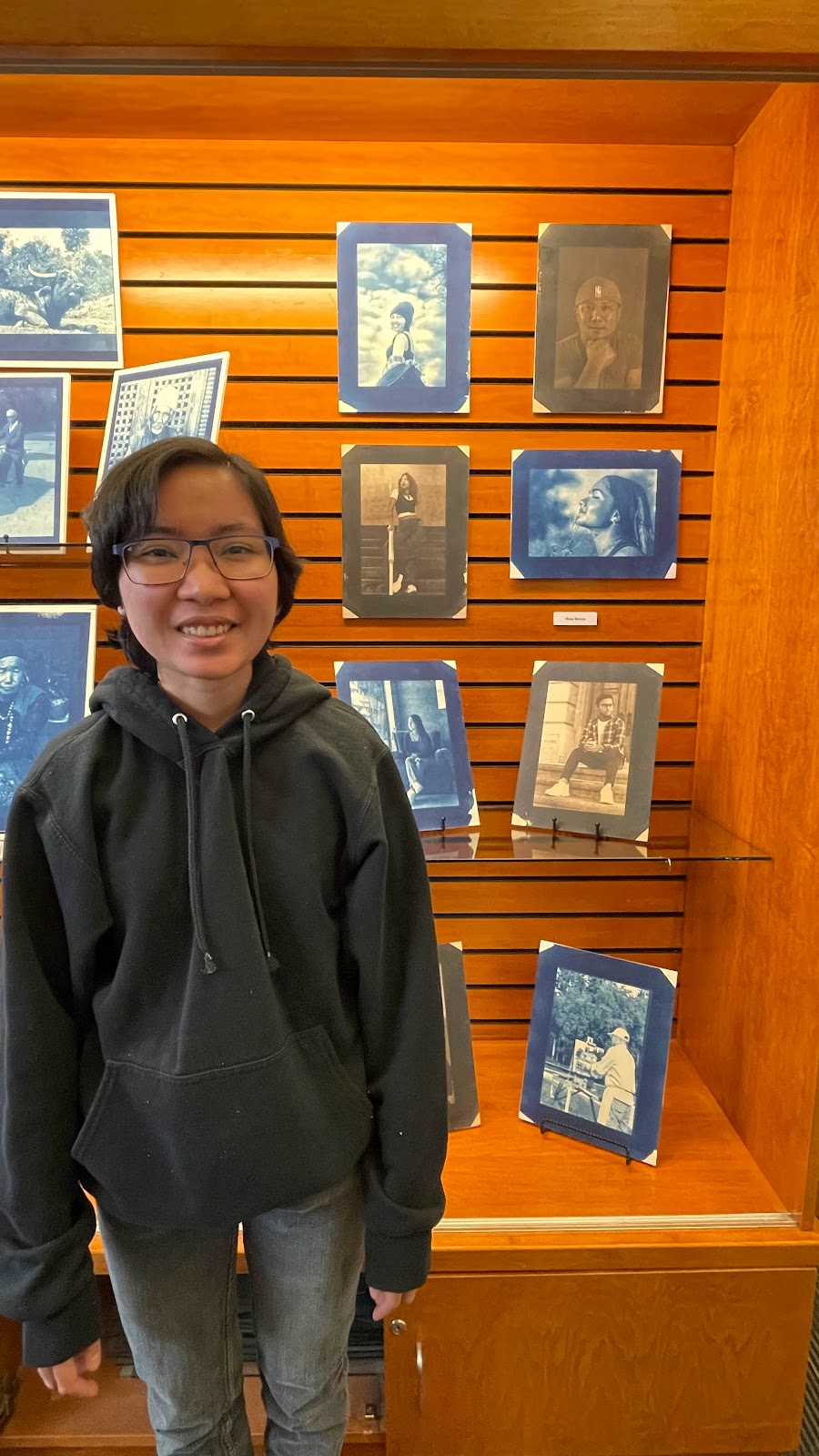
I am Mary Rose Molina, a student at the University of Regina majoring in Political Science and minoring in Photography. I was born and raised in Mati City, Davao Oriental, Philippines, and an immigrant in Regina, Saskatchewan, Canada. I am passionate about photography, and I am eager for my journey ahead.

Exposed: 15 minutes
with foam and glass

Exposed: 15 minutes
with foam and glass

Exposed: 15 minutes
with foam and glass

Exposed: 15 minutes
with foam and glass

Exposed: 15 minutes
with foam and glass
Toned: Wine tannin for 15 minutes

Exposed: 15 minutes
with foam and glass
Toned: Wine tannin for 15 minutes

Exposed: 15 minutes
with foam and glass
Toned: Wine tannin for 15 minutes

Exposed: 15 minutes
with foam and glass
Toned: Wine tannin for 15 minutes


Wednesday, March 27, 2024

Digital Negatives: My Family's Blueprint

 Hello, my name is Rhylynn Wahl, I'm a digital & film artist based in Regina, Saskatchewan. Currently, I am completing my bachelor's degree in computer science, & a certificate in photography with the University of Regina. 

Cyanotype is known as the original blueprint due to its vibrant blue image inspiring me to name the work My Family's Blueprint. It is a collection of negatives my mother took when she was in her twenties. These images are a mixture of trips, building the home we live in today and my parent's wedding day. People throughout the work are family members who have passed and her friends who are still in our lives today. This was a time when my family was being created. Looking back at all of these images made me smile seeing a different side of them. As well as seeing family members' young and old dogs as puppies. 

This artwork was defiantly a processor of tough love; 

I scanned 210 film strips

Edited 257 images

Printed 12.75 pages of negatives

Developed 57 pages 

Toned 193 images 

Mounted 130 images  


For toning I used multiple different methods from the book Cyanotype Toning Using Botanicals to Tone BluePrints Naturally written by Annette Golaz. I toned using green tea, instant coffee, sweet potato peels, wine tannin and Fenugreek seeds. This is what gave me all the different tonal ranges. 


Untoned Cyanotype 


Bleached & Toned with Sweet Potatoes for 2 hours 

Bleached & Toned with Instant Coffee for 1 hour 

Bleached & Toned with Fenugreek Seeds for 20 minutes 

Bleached & toned with wine tannin for 20 minutes 

Wednesday, March 20, 2024

Public Recognition for Through Blue 2024

 Well I have been thrilled by the positive response to the first Archer Library installation.

The project has been featured on the UofR Stories pages, and I, along with Dr. Hart and student Elizabeth Dow, were interviewed on the Morning Edition with CBC Regina. 

Check these out, and watch for our next installation of works in late March of students' cyanotype prints from digital negatives.

Cyanotype Final Installation

 Hello everyone, I'm Nico Inocalla. I'm finishing up my bachelor's degree in Visual Arts in Fall 2024. Learning cyanotype not on...